
Table of Contents
Granite countertops are built for everyday use, but even a durable natural stone benefits from the right cleaning and maintenance routine. Food spills, cooking oils, water spots, heat and improper cleaning products can affect the surface over time.
The good news is that caring for granite does not require complicated maintenance. Regular cleaning with suitable products, quick attention to spills, proper protection during cooking and periodic attention to sealing can help keep your countertop looking its best.
If you’re considering granite for your kitchen or bathroom, Rockwood Stone Countertops offers granite countertops in Winnipeg in a range of natural colours and patterns.
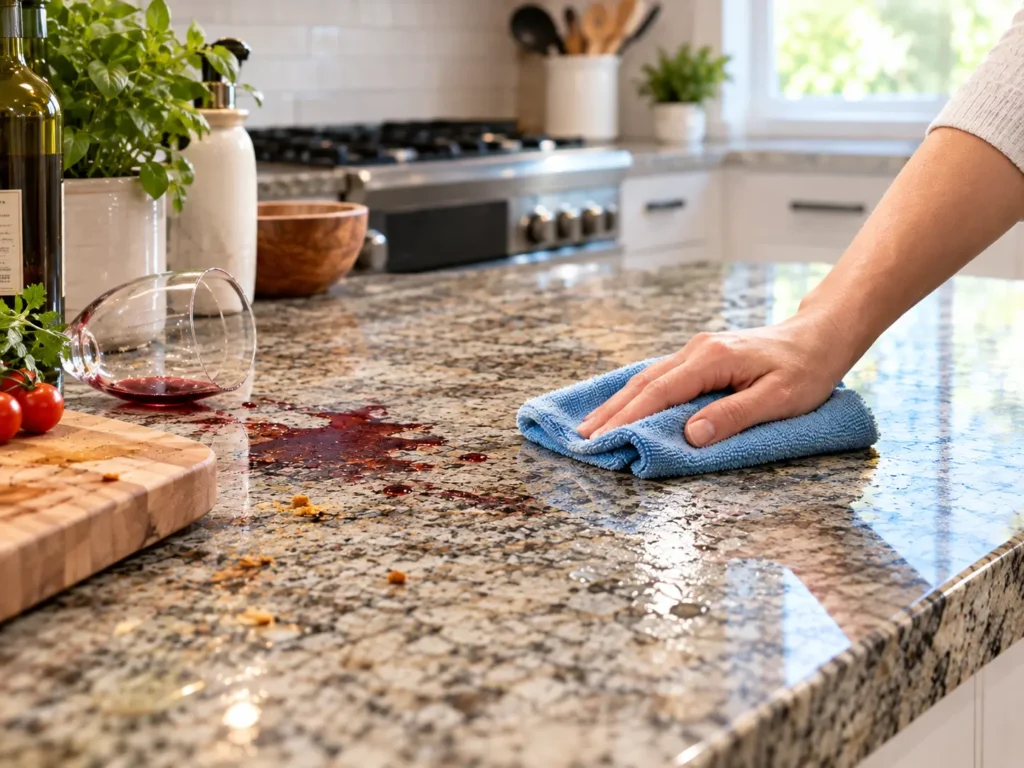
How to Clean Granite Countertops Every Day
Daily granite cleaning should be simple and gentle. You generally do not need strong chemicals or abrasive tools to remove normal food residue and surface dirt.
Step 1: Remove Crumbs and Loose Debris
Start by removing crumbs, dust and other loose particles with a soft microfiber cloth.
This prevents debris from being dragged across the surface when you wipe the countertop.
Step 2: Use Warm Water and a Mild Cleaner
For routine cleaning, use warm water with a small amount of mild dish soap or a cleaner specifically designed for natural stone.
Avoid using excessive amounts of cleaning product. Too much soap can leave a film on the countertop and make the surface appear dull.
Step 3: Wipe With a Soft Cloth
Use a microfiber cloth or another non-abrasive cloth to wipe the countertop.
Pay particular attention to areas around the sink, cooktop, food-preparation areas and countertop edges where residue can accumulate.
Step 4: Dry the Surface
After cleaning, wipe the countertop with a clean, dry cloth.
Drying helps minimize water spots and residue, especially around sinks and faucets.
For everyday care, see how to clean granite countertops for practical cleaning tips.
7 Ways to Clean and Maintain Granite Countertops
Daily cleaning is only one part of granite countertop care. These habits can help protect the surface from common problems associated with everyday use.
1. Clean Spills as Soon as Possible
Do not allow coffee, wine, oils, sauces or strongly coloured foods to sit on the countertop unnecessarily.
Blot spills rather than spreading them across the surface. Then clean the area with a suitable stone-safe cleaner.
Quick cleanup is particularly useful for porous natural stone because the longer certain substances remain on the surface, the more opportunity they may have to penetrate.
When regular cleaning isn’t enough, removing stains from granite countertops may require a different approach.
2. Use Granite-Safe Cleaning Products
A product being labelled as a general household cleaner does not automatically mean it is suitable for granite.
For routine maintenance, choose a cleaner intended for natural stone or use a simple mild cleaning solution recommended for the specific countertop.
A pH-neutral stone cleaner can be a practical choice for regular care.
3. Avoid Abrasive Cleaning Materials
Granite is hard, but abrasive cleaning materials are unnecessary for everyday maintenance.
Avoid rough scouring pads, abrasive powders and similar products that can affect the finish over time.
A soft microfiber cloth is usually sufficient for routine cleaning.
4. Use Cutting Boards
Granite provides a durable work surface, but that does not mean you should use it as a cutting board.
Use a dedicated cutting board when preparing food. This protects the countertop while also protecting your knives.
It also reduces the possibility of metal objects, grit or other materials being dragged across the surface.
5. Use Trivets and Heat Protection
Granite has good heat resistance, making it suitable for many kitchen applications. However, using a trivet or heat-resistant pad under very hot cookware is still a sensible precaution.
The temperature of cookware can vary significantly depending on how it was used, and avoiding direct contact with extremely hot items is a simple way to reduce unnecessary thermal stress.
If you’re concerned about heat from cookware, heat-resistant countertop options in Winnipeg can help you compare suitable materials.
6. Keep Water and Mineral Deposits Under Control
Water can repeatedly dry around sinks and faucets, leaving visible spots or mineral residue.
Wipe standing water from the countertop and clean the area regularly using an appropriate stone-safe product.
Do not assume that an acidic household cleaner is the best solution for mineral buildup. Products that work well on other surfaces may not be appropriate for natural stone.
7. Monitor the Countertop’s Sealer
Many granite countertops are sealed to reduce the absorption of liquids and staining substances.
However, sealing does not make granite completely stain-proof, and the effectiveness of a sealer can change with time, cleaning and everyday use.
What Cleaner Is Safe for Granite Countertops?
For routine granite countertop cleaning, a mild cleaner designed for natural stone is a good starting point.
Warm water and a small amount of mild dish soap may also be suitable for everyday cleaning, depending on the manufacturer’s care recommendations for your particular stone.
The goal is to remove dirt and residue without repeatedly exposing the surface to unnecessary chemicals.
What Should You Avoid Using on Granite Countertops?
Some common household cleaning products are not appropriate for routine granite care.
Avoid using the following without confirming that they are suitable for your specific stone and finish:
- Abrasive powders
- Rough scouring pads
- Strong acidic cleaners
- Lemon or vinegar-based DIY cleaning mixtures
- Harsh chemicals not intended for natural stone
- Products that leave waxy or heavy residue
- Unverified stain-removal mixtures
The safest approach is to use products specifically recommended for granite or natural stone.
How Often Should Granite Countertops Be Sealed?
There is no single sealing schedule that applies to every granite countertop.
The appropriate frequency can depend on:
- The type of granite
- The stone’s porosity
- The existing sealer
- How heavily the countertop is used
- The location of the countertop
- Cleaning habits
- The manufacturer’s recommendations
Rather than automatically resealing at a fixed interval, monitor the condition of the countertop and follow the recommendations associated with the stone and sealer.
How Can You Tell if Granite Needs Resealing?
One consideration is how the stone reacts to moisture.
If you notice that water appears to absorb into the stone more readily than before, it may be worth discussing resealing with a countertop professional or following the manufacturer’s recommended testing method.
Do not assume that every dark mark means the countertop needs sealer. A stain, residue, scratch or other surface issue can have a different cause.
How to Remove Common Granite Countertop Stains
Different substances can produce different types of stains, so the treatment should depend on what caused the discoloration.
| Stain or residue | Common source | General approach |
| Oil or grease | Cooking oils and food | Clean promptly with an appropriate stone-safe product |
| Coffee | Drinks and spills | Blot and clean promptly |
| Red wine | Beverage spills | Clean as soon as possible |
| Food residue | Sauces and ingredients | Use mild stone-safe cleaning |
| Water spots | Dried water | Wipe and dry regularly |
| Soap residue | Bathroom use | Use a suitable stone-safe cleaner |
For persistent discoloration, avoid immediately moving to stronger chemicals. First identify the type of stain and choose a treatment appropriate for the stone.
Granite Stains vs. Etching vs. Scratches
Not every mark on granite is a stain.
Understanding the difference can prevent you from using the wrong cleaning method.
Staining
A stain occurs when a substance causes discoloration, often after penetrating the stone.
Common examples include oil, coffee and certain food or beverage spills.
Etching
Etching refers to a change in the surface caused by a chemical reaction. It is different from a simple stain and may appear as a dull or altered area.
Scratching
A scratch is physical surface damage caused by contact with another material.
If a mark does not disappear with normal cleaning, it is worth determining whether you are dealing with a stain, residue, scratch or another surface issue.
How to Protect Granite From Scratches and Daily Wear
Simple habits can reduce everyday wear:
- Use cutting boards
- Lift heavy objects rather than dragging them
- Keep grit and debris off the countertop
- Use suitable cleaning cloths
- Avoid abrasive pads
- Use trivets under very hot cookware
- Clean spills promptly
Regular use can leave its mark, so knowing how to protect granite from stains and scratches is important.
Can You Put Hot Pans on Granite?
Granite is known for its ability to handle heat, which is one reason it is widely used for kitchen countertops.
However, we still recommend using trivets or heat-resistant pads under very hot cookware.
This is a simple preventative habit that can reduce unnecessary thermal stress and help protect the surrounding countertop area.
Can Granite Countertops Scratch?
Granite is a hard natural stone and generally performs well under normal household use.
However, it should not be treated as completely scratch-proof.
Cutting directly on the countertop, dragging abrasive objects across the surface or allowing grit to remain underneath appliances can contribute to surface wear.
Using cutting boards and lifting objects instead of dragging them are easy ways to reduce these risks.
Why Can Granite Countertops Lose Their Shine?
A granite countertop can appear dull for several reasons.
Cleaning Product Residue
Some products can leave a film on the surface when they are overused or not properly removed.
Water and Mineral Deposits
Repeated exposure to water can leave visible deposits, especially around sinks.
Surface Wear
Frequent use, abrasive materials and improper cleaning can affect the appearance of the finish.
Sealer Problems
Changes in the protective treatment can also affect how the surface looks and performs.
Granite Countertop Care in Winnipeg
Granite countertops in Winnipeg homes experience everyday cooking, cleaning and moisture just like countertops elsewhere, but local homeowners may also deal with seasonal temperature changes and water-related residue.
A practical maintenance routine includes:
- Cleaning spills promptly
- Drying water around sinks
- Using appropriate stone-safe cleaners
- Avoiding abrasive products
- Using cutting boards
- Using trivets for very hot cookware
- Monitoring the condition of the sealer
- Addressing persistent stains or surface changes before using aggressive treatments
The goal is not complicated maintenance. Consistent care using appropriate products is more useful.
Does Granite Require More Maintenance Than Quartz?
Granite and quartz are both popular countertop materials, but their maintenance requirements are different.
| Feature | Granite | Quartz |
| Material | Natural stone | Engineered surface |
| Routine cleaning | Mild stone-safe cleaning | Mild routine cleaning |
| Sealing | May require sealing depending on stone | Generally does not require routine sealing |
| Heat resistance | Generally high | Heat protection is still recommended |
| Appearance | Natural variation | Wide range of engineered patterns |
| Maintenance | Depends on stone and use | Generally straightforward |
If easy upkeep is your priority, countertop materials that require less maintenance are worth considering.
How to Choose a Quality Granite Slab
Maintenance starts with selecting an appropriate slab.
When comparing granite, consider factors such as:
- Stone quality
- Natural variation
- Thickness
- Finish
- Surface consistency
- Fabrication requirements
- Intended application
- Installation quality
Choosing the right slab starts with knowing how to tell if granite is good quality
When Should You Contact a Countertop Professional?
Professional advice can be useful if you notice:
- A persistent stain
- A chip or damaged edge
- Scratches that do not respond to normal cleaning
- Dull or altered areas
- Possible sealer failure
- Damage around a sink or cooktop
- A surface problem you cannot identify
Avoid repeatedly applying stronger cleaning products when the cause of the problem is uncertain.
Identifying the issue first can prevent an inappropriate treatment from making the problem worse.
Frequently Asked Questions About Granite Countertop Care
Can I use dish soap on granite countertops?
A small amount of mild dish soap with warm water can be suitable for routine cleaning, provided it is compatible with your specific countertop and care recommendations.
Can I use vinegar to clean granite?
Vinegar is acidic, so it should not be treated as a general-purpose granite cleaner. Use a product intended for natural stone instead.
How often should granite countertops be sealed?
There is no universal schedule. Sealing requirements depend on the granite, its porosity, existing treatment and level of use.
What is the best way to clean granite every day?
Use warm water and a mild stone-safe cleaner with a soft cloth. Clean spills promptly and dry the surface afterward.
How do I remove stains from granite?
Identify the substance responsible for the stain before choosing a treatment. Avoid aggressive chemicals and abrasive cleaning methods unless they are specifically recommended for the stone.
Can hot pans damage granite?
Granite is highly heat resistant, but using a trivet under very hot cookware is still a practical precaution.
Does granite need special care in a bathroom?
The same basic principles apply. Clean with suitable products, remove standing water and monitor areas around sinks and faucets.
A Simple Granite Countertop Maintenance Routine
You do not need a complicated schedule.
Every Day
- Wipe spills promptly
- Remove food residue
- Dry water around sinks
- Use suitable cleaning products
Every Week
- Clean the entire countertop
- Check high-use areas
- Remove visible residue and water spots
Periodically
- Check the condition of the sealer
- Look for chips, scratches or persistent stains
- Review the stone manufacturer’s care recommendations
Consistent maintenance is more useful than relying on aggressive cleaning after problems develop.
Conclusion
Granite countertops are designed for everyday use, but the right maintenance routine helps preserve their appearance and performance.
The essentials are straightforward: clean spills promptly, use gentle stone-safe products, avoid unnecessary abrasion and harsh chemicals, protect the surface during cooking and monitor the condition of the sealer.
If you are dealing with a stain, scratch, dull area or other countertop problem, identify the cause before trying an aggressive treatment.
For homeowners considering granite countertops in Winnipeg, Rockwood Stone Countertops can help you choose a suitable granite surface and understand the care requirements associated with your selected stone.