
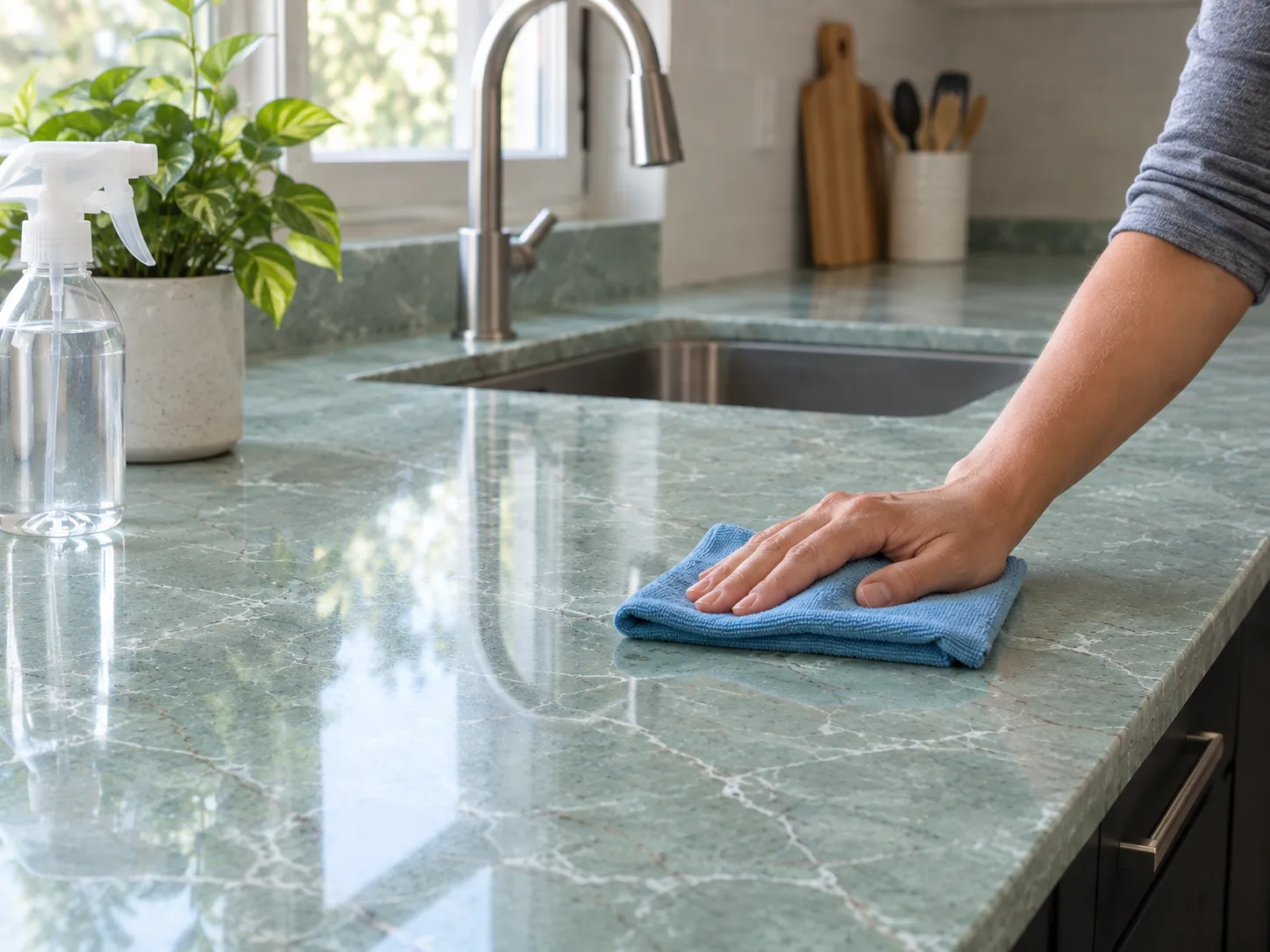
Cleaning granite countertops is simple when you use the right products and avoid cleaners that can affect the stone or its sealer. But like any kitchen surface, granite needs regular cleaning and proper care to keep it looking its best.
The good news is that cleaning granite countertops does not need to be complicated. For everyday cleaning, warm water, a small amount of mild dish soap, and a soft microfiber cloth are usually enough. The most important part is knowing what to use, what to avoid, and how to deal with spills before they become stains.
In this guide, we’ll explain how to clean granite countertops step by step, how often to clean them, what products to avoid, how to deal with common stains, and how to maintain the stone for years to come.
If you’re considering granite for a new kitchen or renovation, you can also explore Rockwood Stone’s granite countertops in Winnipeg to see the available options.
Quick Answer: How Do You Clean Granite Countertops?
Use warm water and a small amount of mild dish soap or a cleaner made specifically for granite. Wipe the surface with a soft microfiber cloth, rinse away soap residue, and dry the countertop completely. Clean spills promptly and avoid vinegar, acidic cleaners, abrasive powders, and rough scrubbers.
How Do You Clean Granite Countertops?
For everyday cleaning, wipe your granite countertop with warm water and a small amount of mild dish soap using a soft microfiber cloth. Rinse away any soap residue with clean water and dry the surface completely.
Quick cleaning steps:
- Remove crumbs and loose debris.
- Prepare warm water with a small amount of mild dish soap.
- Wipe the surface with a soft cloth or non-abrasive sponge.
- Rinse away any soap residue.
- Dry the countertop with a clean microfiber towel.
- Wipe spills as soon as they happen.
- Use a granite-safe cleaner when deeper cleaning is needed.
Care requirements can vary by granite, finish, sealer, and manufacturer’s recommendations, so always follow the care instructions for your specific countertop.
What Do You Need to Clean Granite Countertops?
You do not need a large collection of cleaning products.
For routine cleaning, keep these items available:
- Warm water
- Mild dish soap
- Soft microfiber cloth
- Non-abrasive sponge
- Clean, dry microfiber towel
- Granite or natural-stone-safe cleaner when needed
Avoid rough scrubbers, abrasive cleaning powders, and products that are not suitable for natural stone.
A simple cleaning routine is usually better than using strong chemicals unnecessarily.
7 Steps to Clean Granite Countertops
1. Remove Crumbs and Loose Dirt
Start by removing food crumbs, dust, grit, and other loose debris from the countertop.
You can use a soft, dry microfiber cloth to collect the debris. This first step is important because rubbing loose grit across the surface can cause unnecessary wear.
Pay extra attention around:
- Sinks
- Cooktops
- Countertop edges
- Areas around small appliances
- Frequently used food preparation areas
Once the loose debris is removed, you can move on to wet cleaning.
2. Prepare a Mild Cleaning Solution
For everyday cleaning, mix warm water with a small amount of mild dish soap.
You do not need to heavily saturate the countertop or use a large amount of soap. Too much soap can leave a film or residue on the surface.
If you prefer to use a commercial product, choose one specifically labelled as safe for granite or natural stone and follow the product instructions.
3. Wipe the Granite With a Soft Cloth
Dip a microfiber cloth in the cleaning solution and wring it out so it is damp, not soaking wet.
Gently wipe the entire countertop.
Focus on areas where you commonly find:
- Grease
- Food residue
- Fingerprints
- Water marks
- Spills
- Dust
For stuck-on food, allow the damp cloth to loosen the residue rather than aggressively scrubbing the surface.
A soft cloth or non-abrasive sponge is a safer choice than a rough scouring pad.
4. Rinse Away Soap Residue
After cleaning, wipe the countertop again with a clean, damp cloth.
This helps remove leftover soap and cleaning residue.
Leaving cleaning products on the surface repeatedly can create a dull-looking film, especially when too much product is used.
A clean-water wipe is a simple step that helps keep the surface looking fresh.
5. Dry the Countertop Completely
Use a clean, dry microfiber towel to remove moisture from the surface.
Drying is particularly useful around sinks and other areas where water tends to remain on the countertop.
It can also help reduce visible water spots and mineral residue caused by water drying on the surface.
Make drying part of your normal cleaning routine instead of leaving the countertop wet after every wash.
6. Clean Spills as Soon as Possible
Do not wait until a spill dries before cleaning it.
Common kitchen spills include:
- Coffee
- Tea
- Wine
- Juice
- Cooking oil
- Tomato sauce
- Food sauces
- Cosmetics in bathroom areas
Blot a spill with a soft cloth or paper towel instead of aggressively rubbing it across the countertop.
Then clean the area with mild soap and water if necessary.
Quick spill cleanup is especially important for natural stone because the porosity and sealing condition of a particular granite can affect how easily liquids can penetrate the surface.
7. Use the Right Cleaner for Deeper Cleaning
For more than everyday cleaning, choose a cleaner specifically designed for granite or natural stone.
Always check the product label before using it.
If you are unsure whether a product is suitable for your countertop, ask your stone supplier or fabricator before applying it.
Rockwood Stone works with granite and other stone surfaces for Winnipeg homes and businesses, so homeowners can also contact the Rockwood Stone team for countertop guidance when they have questions about their specific surface.
How Often Should You Clean Granite Countertops?
For most busy kitchens, a simple daily wipe is a practical routine, particularly after food preparation.
A basic schedule can look like this:
Daily
- Wipe food and liquid spills.
- Remove crumbs and debris.
- Clean the surface after heavy food preparation.
Weekly or As Needed
- Give the entire countertop a more thorough cleaning.
- Pay attention to areas around the sink, cooktop, and appliances.
- Remove any buildup or residue.
Periodically
Inspect the countertop for:
- Stains
- Dull areas
- Chips
- Cracks
- Areas where water appears to absorb quickly
The right maintenance schedule depends on the stone, finish, use, and sealer. Follow the recommendations provided for your particular countertop rather than relying on one fixed schedule for every granite surface.
What Cleaners Should You Avoid on Granite?
One of the easiest ways to protect granite is to avoid using cleaning products that may not be suitable for natural stone.
Avoid or use caution with:
- Acidic cleaners
- Vinegar-based cleaning solutions
- Lemon or other acidic household ingredients
- Abrasive powders
- Rough scrub pads
- Strong cleaners that are not labelled for natural stone
- Excessive amounts of soap
Vinegar and other acidic products are commonly discouraged for routine granite care because they may affect the protective sealer or finish over time.
Bleach, ammonia, or other strong chemicals should also not be used simply because they are powerful cleaners. Always check whether a product is appropriate for your specific granite and its sealer.
When in doubt, a mild cleaning solution or a product specifically made for natural stone is a safer starting point.
Can You Use Vinegar to Clean Granite Countertops?
It is generally best to avoid vinegar as a regular granite cleaner.
Vinegar is acidic, and repeated exposure may affect the sealer or finish of some granite surfaces.
Instead, use warm water with a small amount of mild dish soap for everyday cleaning, or choose a cleaner specifically formulated for granite or natural stone.
If you have already used vinegar on your granite, there is no need to panic. Stop using it as a regular cleaner and monitor the surface. If you notice dullness, changes in the finish, or other problems, contact a stone professional for advice.
How to Remove Stains From Granite Countertops
Daily cleaning and stain removal are not always the same thing.
If a spill has been sitting on the countertop for some time, avoid immediately reaching for a strong chemical cleaner.
First, identify what caused the stain.
Coffee and Tea
Blot the spill as soon as possible and clean the area with mild soap and water.
For a stain that remains after routine cleaning, use a product specifically designed for stain removal on natural stone and follow the instructions carefully.
Oil and Grease
Remove excess oil first using an absorbent material or clean cloth.
Then clean the area with a suitable granite-safe cleaner.
Avoid aggressive scrubbing because it may damage the finish.
Water Spots
Water spots around sinks and faucets can often be reduced by wiping the area dry after use.
If mineral deposits have built up, do not automatically use vinegar or another acidic cleaner. Choose a product designed to remove mineral deposits from natural stone, or ask a professional for guidance.
Dried Food
Use a damp cloth to soften the residue before gently wiping it away.
Avoid using knives, metal tools, or abrasive pads to scrape food from the countertop.
Stubborn Stains
If a stain remains after normal cleaning, avoid repeatedly applying stronger household chemicals.
The right treatment depends on the type of stain, the stone, the finish, and the sealer. A professional stone specialist can help determine the safest approach.
Does Granite Need to Be Sealed?
Sealing can help improve the stain resistance of many granite surfaces, but the need and frequency can vary.
Not every granite countertop has the same porosity, and different sealers have different properties.
Instead of assuming that every granite countertop needs to be resealed on the same schedule, check:
- The granite type
- The original sealer
- The manufacturer’s recommendations
- How frequently the countertop is used
- Whether liquids appear to absorb into the stone
If you are unsure about the condition of your countertop’s sealer, ask the fabricator or a natural stone professional for advice.
Rockwood Stone provides granite countertop solutions in Winnipeg and can help homeowners understand the care requirements of their selected surface.
How to Protect Granite Countertops From Daily Wear
Cleaning is only one part of granite countertop care.
A few simple habits can help reduce unnecessary wear.
Use Cutting Boards
Granite is hard, but it is still better to use a cutting board rather than cutting directly on the countertop.
A cutting board protects the surface and is also easier on your knives.
Use Trivets for Hot Cookware
Granite has good heat resistance, but using a trivet or heat pad is still a sensible habit, particularly for very hot cookware or when the countertop manufacturer’s care instructions recommend it.
Use Coasters
Use coasters under drinks, especially around areas where water or other liquids may sit for long periods.
Clean Spills Quickly
Do not allow coffee, wine, oil, sauces, or other spills to sit unnecessarily on the surface.
Avoid Dragging Heavy or Abrasive Objects
Small particles underneath appliances or containers can create unnecessary wear when objects are repeatedly moved across the countertop.
Can You Disinfect Granite Countertops?
Granite countertops can be cleaned regularly, but disinfecting requires more care because some disinfecting products may not be suitable for natural stone or its sealer.
If you need to disinfect a granite surface, choose a product that specifically states it is suitable for sealed natural stone and follow the manufacturer’s instructions.
Do not assume that a powerful household disinfectant is automatically safe for granite.
If the countertop is in a commercial, food-service, healthcare, or other setting with specific sanitation requirements, follow the applicable cleaning and disinfection guidance for that environment.
Common Granite Cleaning Mistakes to Avoid
Even a durable countertop can be affected by poor cleaning habits.
Avoid these common mistakes:
Using Vinegar Regularly
Acidic cleaners are not a good default choice for granite.
Using Too Much Soap
More soap does not necessarily mean a cleaner countertop. Excess soap can leave residue.
Using Rough Scrubbers
Abrasive materials can affect the finish.
Leaving Spills for Too Long
Clean spills promptly, especially oils and strongly coloured liquids.
Ignoring the Sealer
The condition of the sealer can affect stain resistance, so follow the recommended maintenance guidance for your specific countertop.
Using Random Household Cleaners
Always check whether a cleaner is suitable for granite or natural stone before using it.
Granite Countertop Cleaning FAQs
1. What is the best way to clean granite countertops?
For everyday cleaning, use warm water with a small amount of mild dish soap and a soft microfiber cloth. Wipe the surface gently, remove any soap residue with clean water, and dry the countertop.
2. Can I clean granite countertops with dish soap?
Yes, a small amount of mild dish soap with warm water is commonly used for routine granite cleaning. Avoid using excessive soap because it can leave residue.
3. Can I use vinegar on granite countertops?
It is best to avoid vinegar as a regular granite cleaner because it is acidic and may affect the sealer or finish over time.
4. How often should granite countertops be cleaned?
Clean spills as soon as they happen and wipe the countertop regularly, particularly after food preparation. The exact cleaning routine depends on how frequently the countertop is used.
5. How do I remove coffee stains from granite?
Blot the spill promptly and clean the area with mild soap and water. If a stain remains, use a natural-stone-safe stain treatment according to its instructions or consult a stone professional.
6. How do I remove water spots from granite?
Start by wiping the area dry and cleaning it with a suitable granite cleaner. For mineral buildup, use a product specifically designed for natural stone rather than automatically using vinegar or another acidic cleaner.
7. Does granite need to be sealed?
Many granite countertops benefit from sealing because it can improve resistance to staining, but the need and frequency depend on the specific stone, sealer, and use. Follow the recommendations for your countertop.
8. Can hot pans damage granite countertops?
Granite has good heat resistance, but using trivets or heat pads is still a sensible way to reduce unnecessary thermal stress and protect the surface.
9. Can I cut directly on a granite countertop?
It is better to use a cutting board. Cutting directly on granite can cause wear and can also damage your knives.
10. What should I do if my granite countertop looks dull?
First, check whether the dullness is caused by cleaning-product residue, buildup, or another surface issue. Avoid using aggressive chemicals or abrasive products to try to restore the shine. If normal cleaning does not help, contact a stone professional.
When Should You Contact a Granite Countertop Professional?
Routine cleaning can handle most everyday dirt and spills, but some problems need professional attention.
Consider contacting a countertop professional if you notice:
- Deep or persistent stains
- Chips or cracks
- A damaged or worn finish
- Significant dullness that does not improve with normal cleaning
- Problems with the countertop sealer
- Damage around sinks or edges
- Uncertainty about which cleaner or treatment is safe
Professional assessment is especially useful when you are unsure what caused the problem. Using the wrong product can sometimes make a surface issue worse.
If you’re planning a new countertop or need advice about a stone surface, Rockwood Stone’s countertop services include custom fabrication, professional installation, countertop removal, material selection, and finishing services.
Why Proper Granite Care Matters
Granite is a durable natural stone, but good maintenance helps preserve its appearance and makes everyday cleaning easier.
The most important habits are simple:
- Clean spills promptly.
- Use mild, stone-safe cleaning products.
- Avoid acidic and abrasive cleaners.
- Use soft cloths rather than rough scrubbers.
- Dry the surface after cleaning.
- Use cutting boards and trivets.
- Follow the care and sealing recommendations for your specific granite.
With the right routine, granite can remain a practical and attractive surface for years.
If you’re considering granite for a kitchen, bathroom, or other space, you can browse Rockwood Stone’s stone collection to compare granite with other countertop materials such as quartz, marble, Dekton, porcelain, and quartzite.