
Table of Contents
Picking a countertop isn’t just about what looks good in a showroom. In a real Winnipeg kitchen, your counters get hot pans, coffee spills, kids’ messes, and daily wear. Trust me, that’s where the quartzite vs. quartz question gets real.
From my experience, Premium quartzite countertops in Winnipeg are a favourite. People love that natural stone look that also handles abuse. Quartz is tempting too—low-maintenance, predictable—but it can disappoint if you’re not careful. Let me break down what works, what often fails, and my honest take.
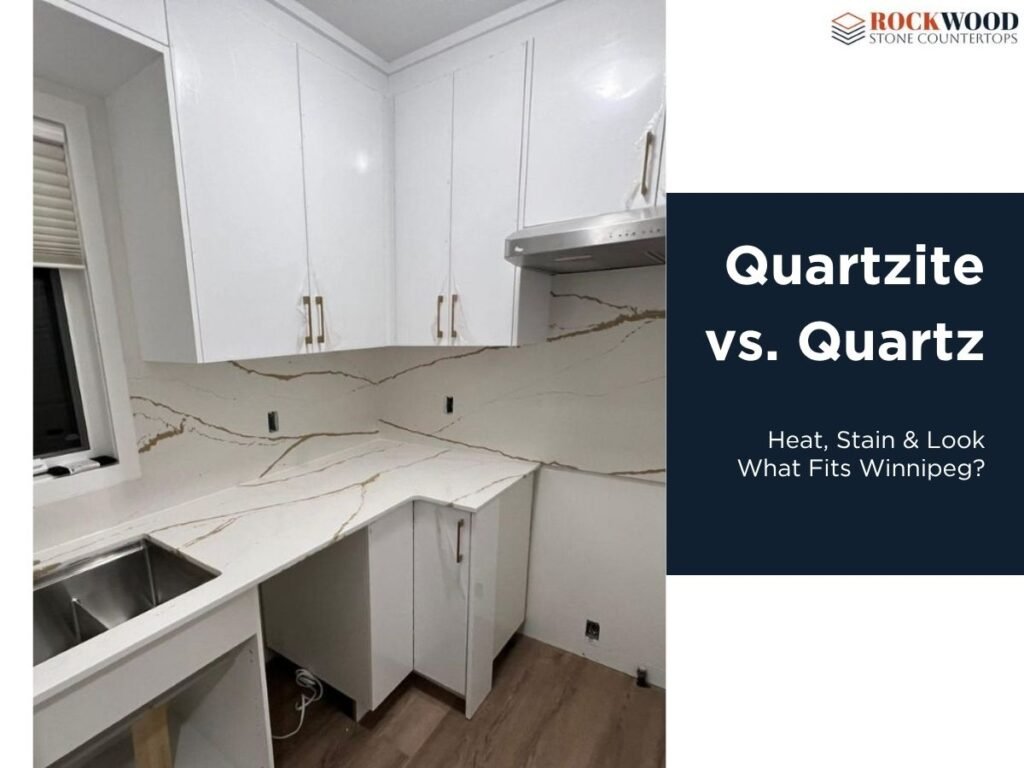
Quartzite vs Quartz: The Quick Reality
Here’s the truth without sugar-coating:
- Quartzite = real stone, tough, heat-resistant, natural patterns
- Quartz = engineered, easy to clean, consistent look
Both work. Which is better depends on your kitchen habits. In my opinion, most people pick the wrong one because they’re thinking only about style.
What’s the Difference?
Quartzite (Natural Stone)
Quartzite is a natural material, formed under intense heat and pressure. Looks like marble, but stronger.
Why it works:
- Unique, natural patterns that make your kitchen stand out
- Handles hot pans like a pro
- Perfect for durable kitchen countertops in Winnipeg
Where it can fail:
- Needs sealing once a year
- Not zero-maintenance
My take: I almost always recommend quartzite if someone wants real stone that lasts. A bit of upkeep is worth it for long-term beauty.
Quartz (Engineered Stone)
Quartz is crushed stone mixed with resin. The goal: uniform, low-maintenance surfaces.
Why it works:
- Non-porous, so spills don’t stain easily
- Quick to clean daily
- Predictable patterns
Where it can fail:
- Heat can damage it
- Some slabs look “too perfect,” missing that natural vibe
My take: Quartz is fine if you want convenience, but it won’t survive hot pans and heavy abuse like quartzite.
Heat Resistance: Real-Life Test
Most people don’t bother with trivets. Hot pans hit the counter. I’ve seen quartz discolour or crack from that.
- Quartzite: Takes heat like a champ. I’ve installed it in homes where pans go straight on—it holds up.
- Quartz: Can take moderate heat. Too hot? It may warp or stain.
Opinion: Cook often? Go quartzite. Use trivets religiously and mostly reheat food? Quartz can work, but I’ve seen it fail in busy kitchens.
Stains: What Actually Cleans Up
- Quartz: Wipes clean with little effort. Coffee, wine, oil—no problem. Perfect for busy households.
- Quartzite: Slightly porous. Needs sealing. Skip it, and you could get a stubborn wine or oil stain.
What usually works:
- Quartz → wipe and forget
- Quartzite → seal once a year, clean spills promptly
Personal judgment: Most people forget sealing. I’ve seen it ruin the look. A simple annual seal keeps quartzite gorgeous.
Durability: Which One Survives
| Feature | Quartzite | Quartz |
| Scratch resistance | Very high | High |
| Heat resistance | Excellent | Moderate |
| Lifespan | Long-term | Long-term |
| Maintenance | Moderate | Low |
What usually works: Quartzite takes heavy use without complaint.
What often fails: Quartz can scratch or discolour under heat if misused.
Look & Style: What Fits Your Taste?
- Quartzite: Every slab is unique. High-end, natural vibe.
- Quartz: Uniform, predictable. Good for minimalist or modern kitchens.
From experience:
- Love natural, one-of-a-kind designs → quartzite
- Prefer consistency → quartz
Cost in 2026
- Quartzite: Slightly higher due to natural sourcing and installation
- Quartz: More predictable and budget-friendly
My take: Quartzite is worth it if you want long-term beauty. Quartz is fine if cost and convenience matter more.
Real-Life Decisions: What Works & What Fails
Pick Quartzite if:
- You cook often
- You want natural beauty and unique stone
- Occasional maintenance isn’t a dealbreaker
Pick Quartz if:
- Low-maintenance matters most
- You want a clean, uniform look
- You rarely put hot cookware directly on the surface
Observation: Homeowners who choose Rockwood Stone Countertops for quartzite installations are usually thrilled years later. Quartz works too, but it can show wear faster in busy kitchens.
Winnipeg Kitchens: What Fits Best?
Winnipeg kitchens face temperature swings, busy families, and serious cooking. From what I’ve seen:
- Quartzite → best for high-use kitchens
- Quartz → fine for low-maintenance living
If your kitchen is the heart of the home, quartzite usually lasts longer and keeps its charm.
Practical Tip Most People Miss
Most people choose counters for their appearance first, then regret it when they don’t withstand real life. That’s why understanding the key benefits of choosing quartzite countertops is key. Durability, heat resistance, and maintenance matter more than just colour or pattern.
Key Takeaways
- Quartzite is strong and one of the best heat-resistant countertops in Winnipeg.
- Quartz is convenient, easy to clean, and low-maintenance.
- Quartzite needs sealing but delivers unmatched natural beauty.
- Quartz is non-porous, making daily cleaning easy.
- For durable kitchen countertops in Winnipeg, quartzite is often the better long-term choice.
- Choose based on how you live in your kitchen, not just how it looks.
Conclusion
There’s no universal “best” countertop—only what fits your lifestyle.
Want something natural, strong, and heat-resistant? Go quartzite. Want easy cleaning and consistent patterns? Quartz works.
Homeowners often trust Rockwood Stone Countertops to make the right choice. My advice: pick the counter that handles real life, not just the showroom shine.
FAQs
1. Which is better for heat: quartzite or quartz?
Quartzite is better for heat resistance as it can handle high temperatures without damage.
2. Do quartzite countertops require maintenance?
Yes, quartzite needs occasional sealing to maintain its stain resistance and durability.
3. Are quartz countertops good for busy kitchens?
Yes, quartz countertops are ideal for busy kitchens due to their low maintenance and non-porous surface.
4. Which countertop is more durable for daily use?
Quartzite is generally more durable due to its higher resistance to heat and scratches.
5. Is quartzite more expensive than quartz?
Yes, quartzite is usually more expensive because it is a natural stone with unique patterns and higher installation costs.