
Table of Contents
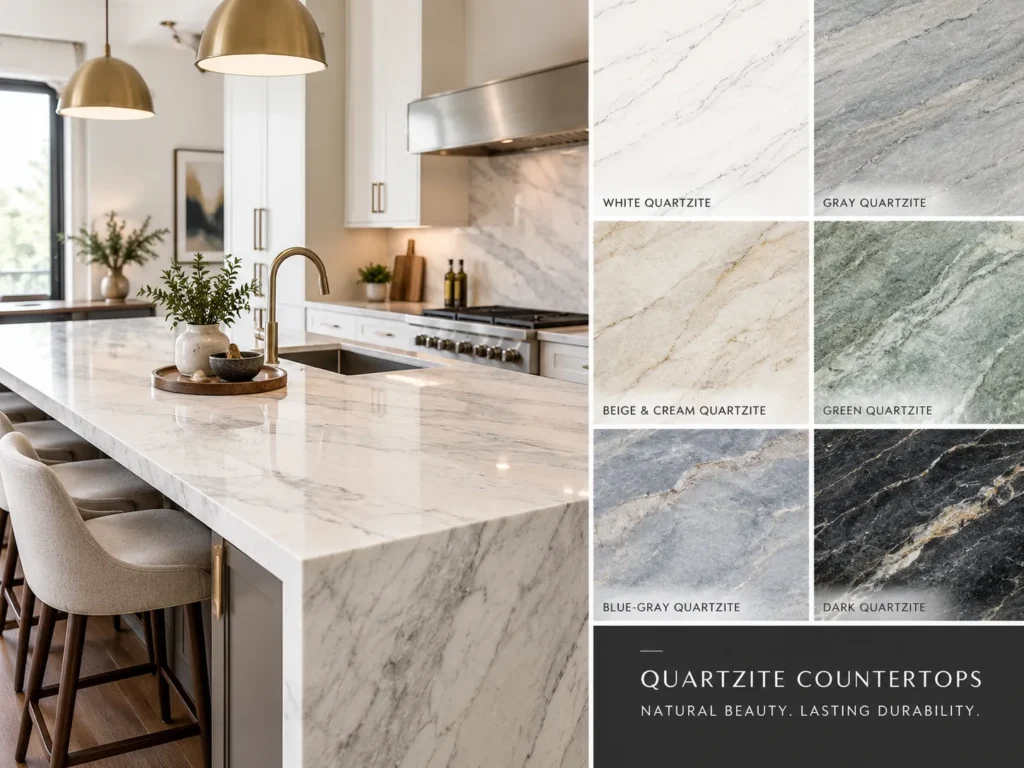
Quartzite is popular with homeowners who want the natural look of stone with a hard, durable surface for everyday kitchen use. One of the biggest reasons people choose quartzite is the variety of colors and patterns available. From bright white slabs with soft veining to dramatic gray, green, beige and darker designs, quartzite can work with both contemporary and traditional kitchens.
But choosing a durable quartzite countertop is about more than picking a color from a photo. Natural stone varies from slab to slab, and the appearance can change depending on lighting, cabinetry, backsplash materials and the size of the countertop.
If you are comparing quartzite countertop colors for a kitchen in Winnipeg, here are the most popular options, what they look like, and what to consider before selecting a slab.
What Is Quartzite?
Quartzite is a natural stone formed when quartz-rich sandstone is subjected to heat and pressure over long periods. The result is a dense natural stone with distinctive patterns and veining.
Unlike engineered quartz, quartzite is a natural material, so every slab has its own mineral movement, background color and veining.
This natural variation is one of the main reasons homeowners choose quartzite for kitchen countertops.
Quartzite is commonly available in:
- White and off-white
- Gray
- Beige and cream
- Green
- Brown
- Blue-gray
- Dark and dramatic tones
The exact color and pattern depend on the quarry and the individual slab.
Popular Quartzite Countertop Colors
1. White Quartzite
White quartzite remains one of the most popular choices for modern kitchens.
Many white quartzite slabs have subtle gray veining that creates a marble-inspired appearance without using actual marble. Others have stronger veins that become a focal point across an island or large countertop.
White quartzite works particularly well with:
- White cabinetry
- Warm wood cabinets
- Gray cabinets
- Matte black hardware
- Minimalist kitchens
- Large kitchen islands
If you are considering a white surface, these tips for choosing a white quartzite slab can help you compare colour, veining, maintenance and the actual stone before making a decision. White backgrounds can range from cool white to warm ivory, while the veining can vary considerably.
2. Gray Quartzite
Gray quartzite offers a more understated appearance than heavily veined white stone.
Depending on the slab, gray quartzite can range from pale silver-gray to deeper charcoal tones. It works well in contemporary kitchens where homeowners want natural stone movement without an overly dramatic pattern.
Gray quartzite pairs well with:
- White cabinets
- Light oak
- Dark wood
- Black fixtures
- Stainless steel appliances
It can also provide a useful middle tone when an all-white kitchen feels too bright.
3. Beige and Cream Quartzite
Cream and beige quartzite can bring warmer tones into a kitchen.
These colors work particularly well with natural wood cabinetry, warm flooring and traditional or transitional kitchen designs.
Compared with cooler white and gray surfaces, cream quartzite can make a kitchen feel warmer without requiring a highly patterned stone.
4. Green Quartzite
Green quartzite can create a stronger visual statement.
Depending on the stone, green may appear as a soft muted tone or a deeper color with contrasting mineral movement. Green quartzite can work especially well on a kitchen island when the surrounding cabinetry and backsplash are kept relatively simple.
Because natural green quartzite can have significant variation, viewing the actual slab is especially important before fabrication.
5. Blue and Blue-Gray Quartzite
Blue and blue-gray quartzite can give a kitchen a distinctive natural-stone appearance.
These slabs may include gray, white, cream or darker mineral movement. They can work well when the countertop is intended to become a focal point rather than simply blend into the cabinetry.
For a balanced design, use the countertop as the main visual feature and keep surrounding finishes more restrained.
6. Brown and Taupe Quartzite
Brown, taupe and earthy quartzite colors are useful for kitchens with warm cabinetry.
They can complement:
- Walnut cabinets
- Oak cabinetry
- Cream backsplashes
- Bronze or brass hardware
- Warm-toned flooring
These colors are also worth considering if you want a kitchen that feels less stark than a predominantly white and gray design.
7. Dramatic Dark Quartzite
Dark quartzite can create a bold appearance, particularly on a large island.
Black, charcoal and deep gray slabs may feature lighter veining that creates strong contrast.
Dark quartzite can work well in larger kitchens with sufficient natural or artificial lighting. In smaller kitchens, however, the surrounding cabinetry and lighting should be considered carefully because a very dark countertop can visually absorb light.
8. Marble-Look Quartzite
Some quartzite slabs have strong white backgrounds and flowing gray or darker veins that resemble marble.
This is one of the reasons quartzite has become popular for homeowners who want a natural marble-inspired design while considering a harder stone surface.
However, not every marble-look slab performs or looks the same. The exact stone, finish, sealing requirements and intended application should be discussed before selection.
9. Highly Veined Quartzite
Some homeowners prefer quartzite with dramatic mineral movement rather than a consistent background.
Highly veined slabs can make a large island or peninsula the centerpiece of a kitchen.
When using a strongly patterned stone, slab layout becomes important. The position of the veins during fabrication can significantly affect the finished appearance.
How to Choose the Right Quartzite Color for Your Kitchen
The best quartzite color is not necessarily the one that looks best in a showroom photograph.
Consider the complete kitchen.
Match the Countertop With Your Cabinets
Start with the cabinetry.
For example:
- White cabinets can work with white, gray, beige or dramatic quartzite.
- Natural wood cabinets often pair well with cream, beige, green and earthy tones.
- Dark cabinetry can work with lighter quartzite to create contrast.
- Two-tone kitchens provide more flexibility because the countertop can connect the two cabinet colors.
Consider Your Backsplash
Your countertop and backsplash should work together rather than compete for attention.
If the quartzite has strong veining, a simpler backsplash can help keep the kitchen visually balanced.
If the countertop has a relatively subtle pattern, the backsplash can introduce additional texture or contrast.
Look at the Stone Under Your Kitchen Lighting
A quartzite slab can look different under showroom lighting, daylight and warm indoor lighting.
Before making a final decision, view the slab in lighting conditions that resemble your kitchen as closely as possible.
This is particularly important with:
- White quartzite
- Cream quartzite
- Gray quartzite
- Blue-gray quartzite
- Strongly veined slabs
Think About the Size of the Island
A small sample cannot always show how a natural stone will look across a large island.
A vein that appears subtle on a small sample can become a major design feature when the slab is installed across several feet of countertop.
For large islands, look at the full slab and discuss the intended layout with your fabricator.
Why Every Quartzite Slab Can Look Different
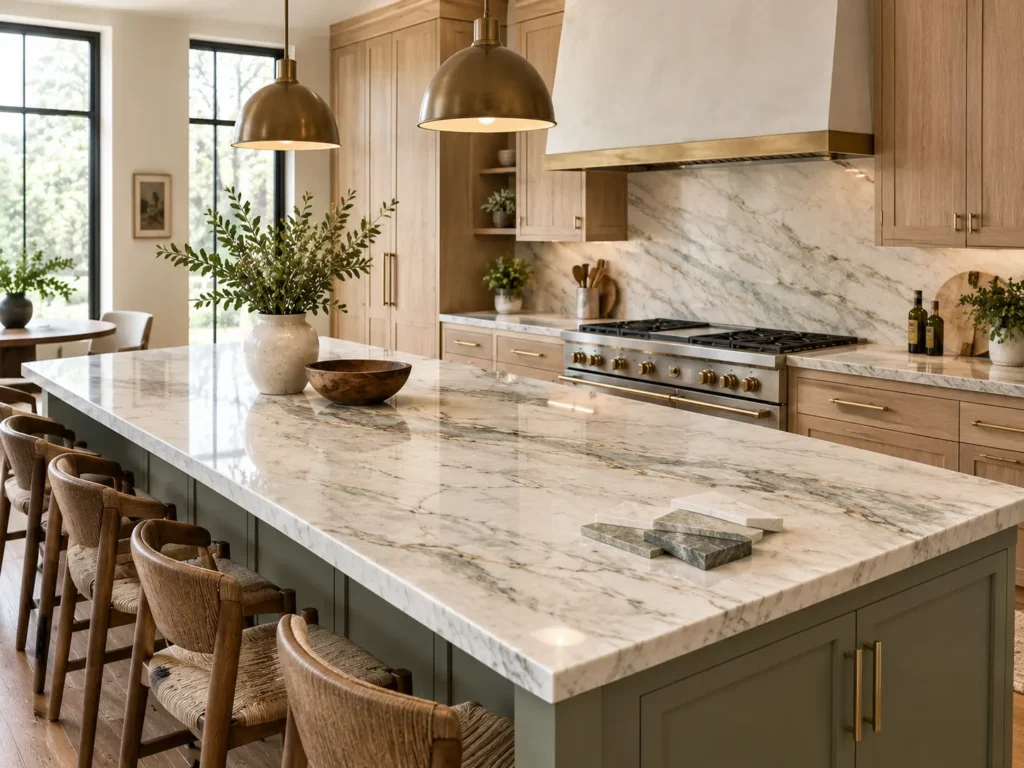
One of the most important things to understand when choosing natural stone is that no two slabs are guaranteed to look identical.
Natural quartzite can vary in:
- Background color
- Veining
- Mineral deposits
- Pattern movement
- Thickness appearance
- Color intensity
Natural quartzite can vary in background colour, veining, mineral deposits and pattern movement. Every slab has its own natural character, which is one of the reasons homeowners choose quartzite for their kitchens.
You can also compare the benefits of quartzite countertops for kitchens when deciding whether the material fits your everyday needs.
Quartzite vs. Quartz: Are They the Same?
Despite their similar names, quartzite and quartz countertops are different materials.
Quartzite is a natural stone, while engineered quartz is a manufactured surface made using quartz and other materials.
The difference affects appearance, maintenance and material characteristics.
Quartzite provides natural variation, including mineral movement and unique veining. Engineered quartz generally offers more consistent color and pattern across slabs.
If you are deciding between the two, consider comparing quartzite vs quartz based on both appearance and everyday maintenance rather than choosing based on the name alone.
Quartzite vs. Granite
Granite is another natural stone commonly used for kitchen countertops.
Both granite and quartzite can provide natural patterns and strong visual character, but their appearance can differ substantially depending on the individual slab.
Granite often has a more granular or crystalline appearance, while some quartzites have flowing veining that resembles marble.
The best choice depends on the specific slabs you are comparing, your design preferences and the maintenance requirements of the material.
Does Quartzite Need Sealing?
Many quartzite countertops require sealing because natural stone can have varying levels of porosity. Sealing does not make a countertop completely stain-proof. Instead, it provides additional resistance against substances penetrating the stone.
The appropriate maintenance schedule depends on the specific stone and sealer used. Maintenance is also worth considering when selecting a light-coloured stone. These maintenance tips for light quartzite countertops cover everyday care and ways to protect the surface.
For this reason, homeowners should ask about:
- Whether the selected quartzite requires sealing
- Which sealer is recommended
- How often maintenance may be required
- Which cleaning products are appropriate
Are Quartzite Countertops Suitable for Winnipeg Kitchens?
Winnipeg kitchens have their own practical considerations.
Seasonal changes can bring dry indoor air during winter, changing humidity levels and temperature differences between indoor and outdoor environments. However, the countertop’s everyday exposure to cooking, spills, moisture, heat and cleaning products is generally more important than outdoor temperature alone.
For homeowners in Winnipeg, material selection should therefore consider:
- Daily kitchen use
- Heat exposure
- Spills and staining
- Cleaning habits
- Sealing requirements
- Countertop thickness
- Edge profile
- Installation quality
- Slab layout
The right stone is only one part of a successful countertop installation.
How to Choose a Quartzite Slab Before Fabrication
Before approving a quartzite countertop, inspect the actual slab whenever possible.
Look for:
- Overall background color
Decide whether the stone is warm, cool, bright or muted. - Vein direction
Consider how the pattern will run across the island and perimeter counters. - Natural variation
Identify areas with stronger mineral movement or color changes. - Slab size
Confirm that the slab can accommodate the required countertop dimensions. - Seams
Discuss where seams may be necessary and how the stone pattern will be positioned. - Cutouts
Review the locations of sinks, cooktops and other openings before fabrication. - Edge profile
The edge can change how the countertop looks from different angles.
Quartzite Countertops for Kitchen Islands
Kitchen islands are one of the best applications for visually distinctive quartzite.
A large uninterrupted surface allows natural veining and mineral movement to become part of the kitchen design.
For a statement island, consider:
- Strongly veined white quartzite
- Dramatic gray quartzite
- Green quartzite
- Blue-gray quartzite
- Dark quartzite with contrasting veins
For a quieter design, choose a stone with softer movement and a more consistent background.
What Makes a Quartzite Color a Good Long-Term Choice?
Trends can influence countertop choices, but natural stone is a long-term investment.
Before selecting a color, ask:
- Will I still like this pattern in several years?
- Does it work with my existing cabinets?
- Will the veining compete with the backsplash?
- Does the color work with my flooring?
- How much natural light does the kitchen receive?
- Am I comfortable with natural variation?
- What maintenance does this specific stone require?
A countertop should work with the entire kitchen rather than being selected in isolation.
Choosing Quartzite Countertops in Winnipeg
If you are comparing quartzite countertops in Winnipeg, looking at photographs online is a useful starting point, but it should not be the final step.
At Rockwood Stone Countertops, we help homeowners compare natural stone options based on the kitchen design, slab appearance, intended use and fabrication requirements.
Our process can include slab selection, measurements, custom fabrication and professional installation for residential and commercial spaces.
When comparing quartzite, look beyond the color name. The actual slab, vein movement, finish, dimensions and installation plan all influence the final result.
Frequently Asked Questions
What is the most popular quartzite countertop color?
White and light-colored quartzite remain popular because they work with many kitchen styles and can provide a marble-inspired appearance. However, the best color depends on the cabinetry, lighting and overall kitchen design.
Does quartzite come in different colors?
Yes. Quartzite can occur in white, gray, beige, cream, green, blue, brown, taupe and darker shades. Natural mineral content creates substantial variation between individual slabs.
Is white quartzite a good choice for a kitchen?
White quartzite can be a strong option for kitchens where homeowners want a bright, natural-stone appearance. The specific slab should still be evaluated for its pattern, porosity and maintenance requirements.
Which quartzite color is best for dark cabinets?
Light white, cream, gray or beige quartzite can create contrast with dark cabinetry. Dramatic darker quartzite can also work when the goal is a more monochromatic kitchen.
Does quartzite look like marble?
Some quartzite slabs have flowing veins and light backgrounds that closely resemble marble. However, quartzite is a natural stone with its own mineral structure and characteristics.
How do I choose between quartzite colors?
Compare the actual slabs alongside your cabinet, flooring and backsplash samples. Consider lighting, slab size, vein movement, maintenance and how the stone will be fabricated before making a final decision.
Conclusion
Quartzite countertop colors range from subtle whites and creams to gray, green, blue, brown and dramatic dark patterns. That variety makes quartzite suitable for many kitchen styles, but natural variation means the actual slab matters just as much as the color name.
For a successful selection, consider the cabinetry, backsplash, lighting, island size, vein movement, maintenance requirements and fabrication plan together.
If you are selecting quartzite countertops for a Winnipeg kitchen, viewing the actual slabs and discussing the installation requirements before fabrication can help you choose a surface that works both visually and practically.