
Table of Contents
Quartz countertops in Winnipeg are a popular choice for Winnipeg kitchens because they offer a clean appearance, a wide range of colours, and relatively easy everyday maintenance. However, even though quartz surfaces are durable, they are not completely resistant to heat, scratches, stains, or chemical damage. The way you clean and use your countertops can affect their appearance over time.
Knowing how to protect quartz countertops helps prevent avoidable damage and keeps the surface looking its best. From choosing the right cleaning products to protecting the area around your stove, a few simple habits can make a meaningful difference.
Here are seven important dos and don’ts to help you care for quartz countertops in your kitchen or bathroom.
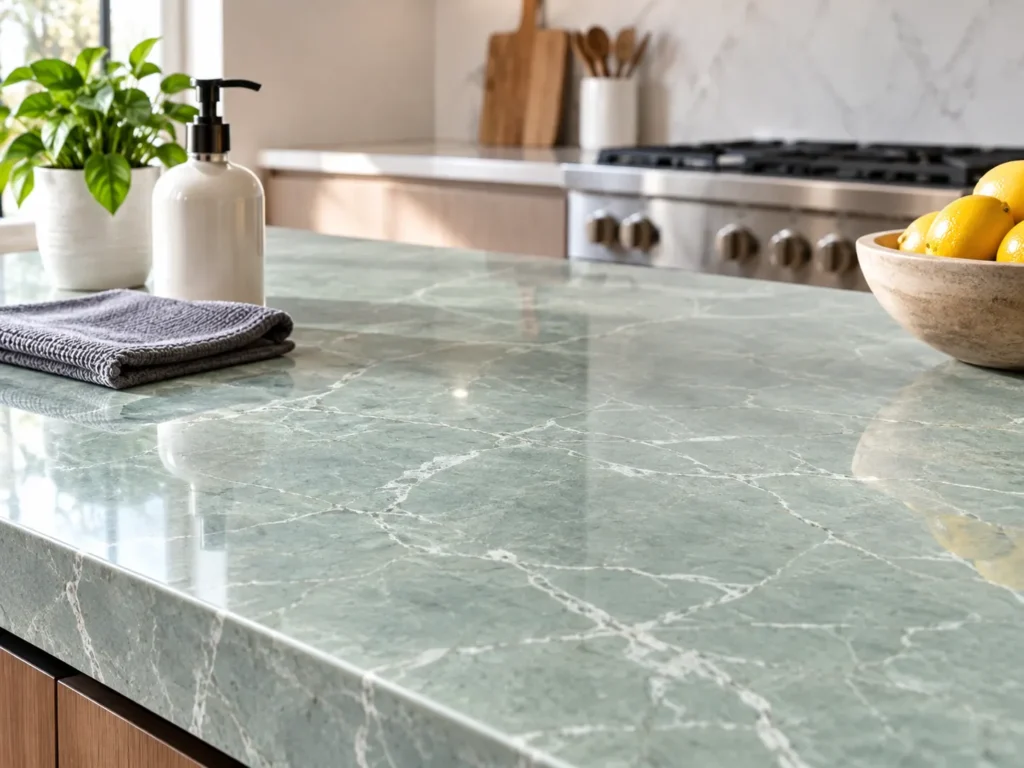
1. Do Clean with Mild Soap and Water
Regular cleaning is one of the simplest ways to maintain quartz countertops. Everyday cooking can leave behind grease, food residue, fingerprints, and spills that make the surface look dull if they are not removed.
For routine cleaning, use a soft microfiber cloth, warm water, and a small amount of mild dish soap. Wipe the surface gently, rinse away any soap residue with a clean, damp cloth, and dry it with a soft towel.
Avoid abrasive scouring pads and rough cleaning tools that could affect the finish over time.
A simple daily cleaning routine:
- Remove crumbs and loose debris.
- Wipe the countertop with mild soapy water.
- Use a clean damp cloth to remove residue.
- Dry the surface to prevent water marks, particularly around sinks.
In Winnipeg homes, hard water can leave mineral deposits around faucets and sink edges. If you notice white marks, use a cleaner approved by your countertop manufacturer rather than an acidic household product.
2. Don’t Place Hot Pots and Pans Directly
Quartz countertops contain natural quartz combined with resins and pigments. Although the material is durable, the resin component can be sensitive to high temperatures and sudden temperature changes.
Placing a hot frying pan, baking tray, or pot directly on the surface may cause discoloration, cracking, or other heat-related damage. The exact level of heat resistance varies by product, so it is important to follow the manufacturer’s care instructions.
How to prevent heat damage:
- Use a heat-resistant trivet or hot pad under cookware.
- Place hot baking trays on a suitable heat-resistant surface.
- Avoid moving hot cookware directly from the oven to the countertop.
- Keep protective mats near the stove for convenient access.
Even if your countertop has handled hot items without visible damage, that does not mean direct heat is safe. Consistent use of trivets is a better long-term habit than relying on the surface’s heat resistance. If heat resistance is a key consideration for your kitchen, choosing the right surface starts with understanding how different materials perform, including heat-resistant countertops in Winnipeg.
3. Do Use Cutting Boards Instead of Cutting Directly
Quartz is a hard surface, but it is not intended to replace a cutting board. Cutting vegetables, meat, or bread directly on the countertop can leave metal marks, damage the finish, or cause wear in vulnerable areas.
Knives may also become dull more quickly when used on a hard stone surface. A cutting board protects both your countertop and your kitchen tools.
Choose a sturdy cutting board that sits securely on the counter. Clean it after preparing food, especially when handling raw meat, poultry, or seafood.
Pay particular attention to the areas around the sink and stove, where food preparation tends to happen most often.
For kitchens with frequent cooking activity, keeping a cutting board within easy reach makes it easier to avoid accidental scratches and marks.
4. Don’t Use Harsh Chemicals or Abrasive Cleaners
Not every household cleaning product is suitable for quartz countertops. Strong chemicals and abrasive products can damage the resin, affect the finish, or leave the surface looking dull.
Avoid using products such as oven cleaners, paint removers, highly alkaline cleaners, and aggressive scouring powders unless your manufacturer specifically approves them. Concentrated bleach, solvents, and acidic cleaners may also be unsuitable.
Proper maintenance helps preserve the appearance and durability of quartz surfaces, especially when adapting to seasonal changes with quartz countertop care in Winnipeg’s climate.
When choosing a cleaning product:
- Check the label for compatibility with engineered quartz.
- Avoid abrasive powders and rough scouring pads.
- Never mix household cleaning chemicals.
- Rinse and dry the countertop after cleaning.
If a stubborn mark does not come off with mild soap and water, check the manufacturer’s recommended cleaning method before trying a stronger product. Different stains may require different treatments, and using the wrong chemical can make the problem worse.
5. Do Wipe Up Spills Before They Dry
Quartz countertops are generally nonporous, which makes them easier to maintain than many unsealed natural stone surfaces. However, nonporous does not mean completely stain-proof or immune to surface damage.
Coffee, tea, wine, tomato sauce, cooking oil, and other substances can leave residue or marks if they remain on the surface. Certain chemicals and strongly pigmented products may also cause discoloration.
When a spill occurs, blot or wipe it up promptly using a soft cloth. Follow with mild soapy water and dry the area.
For dried-on food, soften the residue with warm water before gently wiping it away. Avoid scraping with knives or using abrasive pads.
A useful habit is to clean spills while preparing meals rather than waiting until the end of the day. This is particularly helpful on light-coloured quartz, where residue and marks may be easier to notice.
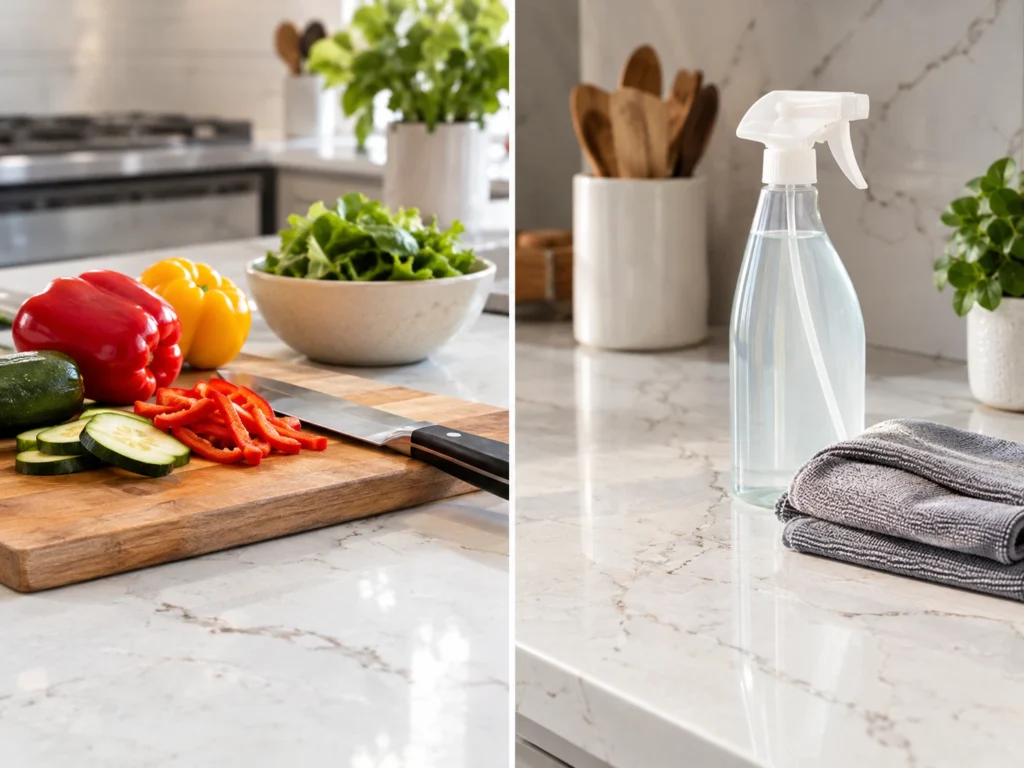
6. Don’t Ignore Sunlight, Moisture, and Vulnerable Areas
Quartz countertops are commonly installed near windows, sinks, dishwashers, and cooking areas. These locations deserve extra attention because prolonged exposure to sunlight, repeated moisture, or heat can affect the surface or nearby materials.
Direct sunlight over extended periods may cause some quartz products to fade or change colour. Product performance varies, so check whether the specific surface is suitable for areas exposed to strong sunlight.
Moisture around sinks is another area to monitor. Although the quartz itself is generally nonporous, water can collect around seams, fixtures, and exposed edges. Poorly maintained joints or cabinetry can develop problems if water is allowed to accumulate.
To protect these areas:
- Use blinds or other window coverings where strong direct sunlight is a concern.
- Wipe up standing water around sinks and faucets.
- Check seams and joints for changes or deterioration.
- Avoid allowing water to pool around countertop cutouts.
- Follow the recommended care instructions for the sink, faucet, and countertop installation.
For outdoor kitchens, do not assume that an indoor quartz countertop is suitable for outdoor use. UV exposure, temperature changes, and weather conditions can affect its performance. Select a surface specifically approved for the intended environment.
7. Do Follow the Manufacturer’s Care and Maintenance Instructions
Quartz countertops may look similar, but their composition, finish, and care requirements can vary by brand and product. Following the manufacturer’s recommendations is one of the best ways to avoid accidental damage.
Some surfaces may have specific restrictions on cleaners, heat exposure, or stain removal. The instructions provided with your countertop should take priority over general cleaning advice.
It is also helpful to understand your countertop’s warranty and the conditions it covers. Damage caused by improper use, excessive heat, unsuitable chemicals, or other excluded conditions may not be covered.
If you notice a persistent stain, unusual discoloration, a chip, or a crack, avoid experimenting with household repair products. Contact your countertop supplier or installer for advice on the appropriate repair options.
For homeowners planning a renovation, reviewing care requirements before selecting a surface can help you choose a countertop that suits your household’s cooking habits and maintenance preferences.
How to Remove Common Marks From Quartz Countertops
The right approach depends on the cause of the mark. Start with gentle cleaning and follow the manufacturer’s instructions before trying stronger treatments.
| Common problem | Recommended approach |
| Food residue | Wipe with warm water, mild dish soap, and a soft cloth. |
| Dried spills | Soften with an approved cleaning solution before gently removing the residue. |
| Grease marks | Use a manufacturer-approved cleaner suitable for engineered quartz. |
| Persistent stains | Check the product’s stain-removal instructions before applying stronger products. |
| Scratches or chips | Have the damage assessed by a qualified professional. |
A visible mark is not always a permanent stain. It may be surface residue, a chemical reaction, or actual damage to the finish. Identifying the cause before attempting treatment can help prevent further damage.
Do Quartz Countertops Need Sealing?
Most engineered quartz countertops do not require sealing because they have a nonporous surface. This is different from some natural stones, including certain granite and quartzite varieties, which may require periodic sealing depending on their characteristics.
Do not assume every stone countertop needs the same maintenance. Confirm the material first and follow its manufacturer’s recommendations before applying a sealer or surface treatment.
Frequently Asked Questions
1. What is the best way to protect quartz countertops?
Use mild soap and water for routine cleaning, wipe up spills promptly, use cutting boards, and place hot cookware on trivets. Avoid abrasive cleaners and chemicals that are not approved for your particular quartz product.
2. Can you put hot pans directly on quartz countertops?
It is best not to. High temperatures and sudden temperature changes may damage the resin in engineered quartz, causing discoloration or cracking. Use a suitable trivet or heat-resistant mat.
3. Do quartz countertops need to be sealed?
Most engineered quartz countertops do not require periodic sealing because their surfaces are generally nonporous. However, care requirements vary by product, so confirm the manufacturer’s recommendations for your specific countertop.
4. Which cleaners should you avoid on quartz countertops?
Avoid abrasive scouring powders, oven cleaners, paint removers, and strong chemicals that are not approved for engineered quartz. Use mild dish soap and water for routine cleaning, or choose a manufacturer-approved quartz cleaner.
5. Can quartz countertops get stained?
Yes. Although quartz is generally stain-resistant, certain substances, concentrated chemicals, and prolonged contact with spills can leave marks or damage the surface. Clean spills promptly and use the recommended cleaning method for stubborn stains.
6. Can quartz countertops be used in outdoor kitchens?
Not every quartz product is suitable for outdoor use. Prolonged UV exposure, temperature changes, and weather conditions may affect the surface. Choose a countertop material specifically rated for the intended outdoor environment.
7. How long can quartz countertops last?
With appropriate use, regular cleaning, and proper installation, quartz countertops can provide many years of service. Their lifespan depends on product quality, installation, usage, and maintenance.
Conclusion
Quartz countertops offer a practical combination of durability and design flexibility, but good maintenance still matters. Avoid direct heat, use cutting boards, choose gentle cleaning products, and clean spills before they dry. Pay attention to sunlight exposure and the areas around sinks, seams, and cutouts.
If you are planning a kitchen or bathroom renovation in Winnipeg, Rockwood Stone Countertops can help you compare quartz and other countertop materials based on your preferred appearance, intended use, and maintenance needs.