
Natural stone countertops add real beauty and long-term value to a home, but each stone behaves differently. Granite, quartzite and marble all look and wear in their own way. This guide explains how each one looks, how much care it needs, and how well it holds up in a cold climate like ours. If you are shopping for Winnipeg kitchen countertops, you will learn what to expect before you spend a dollar.
What Are Natural Stone Countertops?
Natural stone countertops are slabs cut from rock that formed in the earth over millions of years. Quarries cut large blocks, then factories slice them into slabs and polish the surface. Your fabricator cuts the slab to fit your kitchen, shapes the edges, and installs it.
The most common types for homes are granite, marble, quartzite, porcelain, and quartz. Each one forms differently, which explains why each one feels, looks, and wears differently.
Granite is an igneous rock, meaning it formed from cooled magma. Marble and quartzite are metamorphic rocks, meaning heat and pressure changed an older stone.
No two slabs match. That is the main reason homeowners choose stone over manufactured surfaces. The veins, specks, and color shifts in your countertop belong only to your kitchen.
How Do Natural Stone Countertops Look?
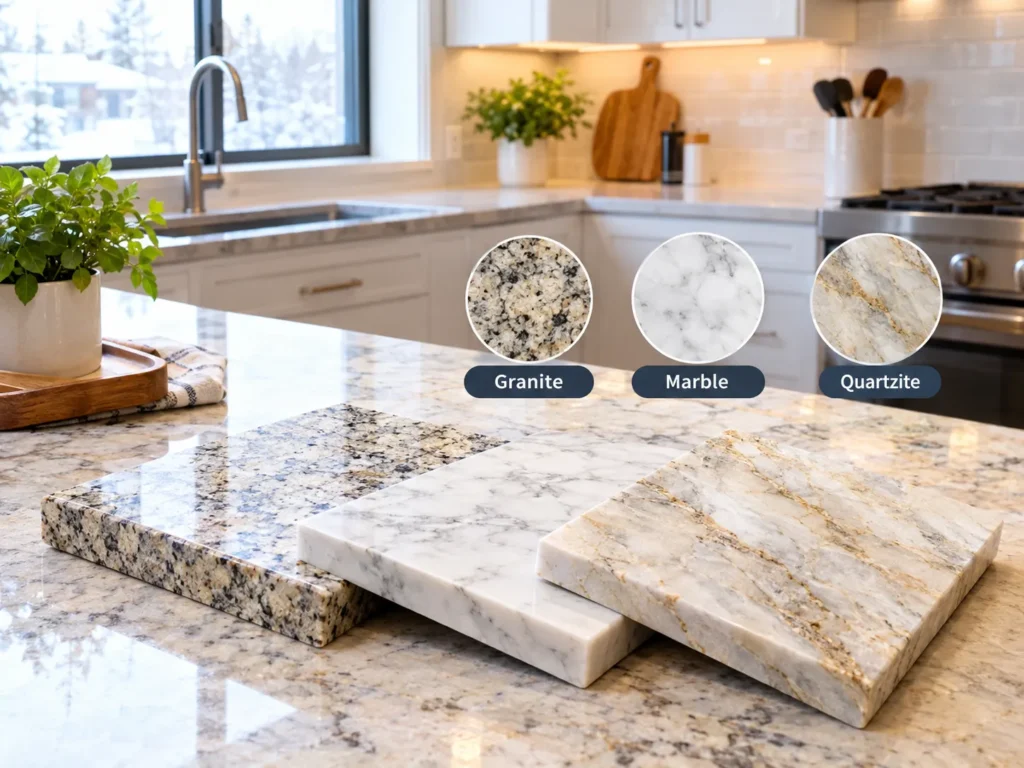
Natural stone looks different from slab to slab, with deep color, real veining, and a depth that printed or manufactured surfaces rarely match. The look depends on the stone type and the finish.
Granite shows speckles and grain in colors like black, gray, brown, white, and even blue. Some slabs look busy, with large crystals. Others look calm and almost solid.
Marble is known for soft, flowing veins on a white or gray background. Carrara marble from Italy has fine gray veining, while Calacatta has bolder, thicker veins and a whiter base.
Quartzite often looks like marble but wears like granite. Many slabs show soft gray or gold veins on a white background. Be careful with the name, because quartzite is a natural stone, while “quartz” countertops are manufactured from crushed quartz and resin. They are two different products.
Finish Options
Finish changes the look as much as the stone does. A polished finish gives a glossy, mirror-like shine and brings out the color. A honed finish is matte and smooth, and it hides fingerprints and light scratches better. A leathered finish has a soft, textured feel and works well on darker granites.
If you want help picking colors that suit current trends, this look at popular countertop colors in Winnipeg shows what local homeowners choose most.
How Durable Are Natural Stone Countertops?
Durability depends on the stone. Granite and quartzite rank highest and marble rank lower with its own strengths and weaknesses.
The Mohs scale measures how hard a mineral is on a scale from 1 to 10. Talc sits at 1 and diamond sits at 10. Quartz, the main mineral in granite and quartzite, rates 7. A steel knife blade rates around 5.5, so a quartz-heavy stone will usually dull your knife before the knife scratches the stone. Marble is mostly calcite, which rates about 3, so it scratches far more easily.
Durability Comparison Table
| Stone | Scratch Resistance | Stain Resistance | Heat Resistance | Sealing Needed |
| Granite | High | Medium to high (when sealed) | High | Yearly, sometimes less |
| Quartzite | Very high | Medium to high (when sealed) | High | Yearly |
| Marble | Low | Low | Medium | Every 6 to 12 months |
Granite is the safe pick for most families. It handles daily chopping, hot pans for short periods, and heavy use. Quartzite goes a step further in hardness, though it can cost more and some slabs need extra care when you shop. Some stones sold as quartzite are actually soft marble, so ask your supplier for a written stone name and test the slab.
Marble is the stone that surprises people. Acids like lemon juice, wine, tomato sauce, and vinegar react with calcite and leave dull spots called etching. Etching is a chemical change in the surface, not a stain, and sealing does not stop it.
How Do You Care for Natural Stone Countertops?
Daily care is simple: wipe spills quickly, use mild dish soap and warm water, and dry the surface with a soft cloth. Seal porous stones on a regular schedule to block stains.
Daily and Weekly Care
Wipe the counter after cooking with a damp microfiber cloth. For a deeper clean, use a stone-safe cleaner or a few drops of dish soap in warm water. Dry the surface to prevent water spots.
Avoid vinegar, bleach, ammonia, and citrus cleaners. Skip abrasive powders and scrubbing pads. These can dull polished stone and strip the sealer.
How to Test If Your Stone Needs Sealing
Follow these steps:
- Pour a small puddle of water, about the size of a coin, on the counter.
- Wait 10 to 15 minutes.
- Look at the stone. If the water beads up, the sealer still works.
- If the spot turns dark or the water soaks in, it is time to reseal.
This simple test takes a few minutes and works on any porous stone. Light-colored granite and marble often need sealing more often than dark granite, because lighter stones tend to be more porous.
How to Seal a Stone Countertop
A penetrating sealer soaks into the stone and fills the tiny pores. It does not leave a film on top. Clean and dry the counter first, apply the sealer with a soft cloth, let it soak in for the time listed on the label, then wipe away any extra. Most products need 24 hours to cure before heavy use.
A practical tip: always seal in a well-ventilated room, and open a window or run the range hood. Many sealers carry strong fumes.
Which Natural Stone Handles Heat Best?
Granite and quartzite handle heat better than most other kitchen surfaces. Stone does not burn or melt the way laminate does.
Still, sudden temperature changes can cause trouble. Setting a pot straight from a hot burner onto a cold stone slab can create thermal shock, which may crack the slab, especially near seams. A trivet costs a few dollars and protects an expensive surface. Resin sealers can also discolor under high heat, so trivets protect the finish too.
If heat is a big concern in your kitchen, this breakdown of heat resistant countertops in Winnipeg compares your main options.
How Does Winnipeg Weather Affect Stone Countertops?
Winnipeg weather affects countertops indirectly, mostly through indoor humidity swings and the stress of installation in winter. Stone sits inside your home, so freezing temperatures do not hurt it directly.
Winnipeg winters are dry. Indoor humidity often drops low when furnaces run, and it can rise again in summer. Wood cabinets expand and contract with these changes, and a poorly supported stone slab can crack when the cabinets move. Good installers level the cabinets, add support for overhangs, and place seams in smart spots.
Winter delivery also matters. A slab carried from a cold truck into a warm house should sit and adjust before the crew works on it. Experienced fabricators plan for this, and they protect your floors and entry on snowy, salty days.
Natural Stone vs. Quartz: Which Is Easier to Maintain?
Quartz is easier to maintain because it does not need sealing, but natural stone often offers more variety and better heat tolerance. The right answer depends on how you cook and how much upkeep you want.
Quartz countertops use about 90 percent crushed quartz mixed with resin. The resin makes the surface non-porous, so stains rarely soak in. The tradeoff is heat. A very hot pan can scorch the resin and leave a mark.
Natural stone has no resin to burn, so granite and quartzite take heat better. Natural stone does ask you to seal it and clean it with care. If you want a surface that needs very little effort, take a look at the best low maintenance countertops for Winnipeg homes.
Common Mistakes Homeowners Make With Natural Stone
Most countertop problems come from a few avoidable mistakes. Here are the ones fabricators see most often.
Choosing from a small sample. A 4-inch sample cannot show the full range of a slab. Granite and marble can change a lot across one slab. Visit a stone yard and look at the actual slab you will buy.
Skipping the water and lemon test. Put a few drops of lemon juice on a hidden corner of a sample. If the shine dulls within a few minutes, the stone contains calcite and will etch.
Using the wrong cleaner. Glass cleaner and bathroom sprays often contain ammonia or acids. Over time, they dull polished stone.
Sitting on the counter. Heavy weight on an overhang can crack a slab, so keep stools and people off it.
Ignoring the sealer. Many homeowners seal once at installation and never again. Stains then show up in the same spots that get the most use, usually near the sink and stove.
How to Choose the Right Natural Stone for Your Kitchen
Choose based on how you live, not only on how the stone looks. A busy family kitchen with kids needs a tougher surface than a quiet kitchen used for light cooking.
Start with your cooking style. If you cook daily with heavy pans and lots of chopping, granite or quartzite fits best. If you bake often and want a cool surface for pastry, marble is the classic choice, as long as you accept some etching.
Next, think about color and light. Dark stones hide crumbs and stains but show dust and water spots. Light stones brighten a room but show stains faster. Look at slabs in your own kitchen light if you can, since showroom lighting changes how colors appear.
Finally, ask your fabricator three questions: Which exact stone is this? Has this slab been sealed? How will you support the overhangs? Clear answers show experience and honesty.
What Should You Do Next?
Natural stone gives your kitchen beauty and lasting value, but each type asks for a different level of care. Granite and quartzite suit most busy homes. Marble rewards you with elegance if you accept its softer nature. Soapstone offers a calm, aged look with excellent stain and heat resistance. Whatever you pick, seal it on schedule, clean it with pH-neutral products, and use trivets and cutting boards.
Your next step is simple. Visit a stone yard, look at full slabs, and test samples at home. Set a budget, then request itemized quotes so you can compare fairly. If you want expert help choosing the right slab for your kitchen, contact Rockwood Stone Countertops today and book your free consultation.
People Also Ask
Is natural stone a good choice for kitchen countertops?
Yes, natural stone works well for kitchens when you pick the right type. Granite and quartzite resist heat and scratches, and each slab looks unique. Marble and limestone need more care. Match the stone to your cooking habits and your willingness to seal and clean it properly.
Which natural stone countertop lasts the longest?
Quartzite and granite last the longest. Both rate around 7 on the Mohs scale, and both can stay in good shape for decades with sealing and gentle cleaning. Many homeowners keep the same granite counters for 20 years or longer without any major wear.
How often should you seal natural stone countertops?
Most granite and quartzite need sealing about once a year. Marble and limestone may need it every 6 to 12 months. Use the water test: if water darkens the stone after 10 to 15 minutes, apply a fresh coat of sealer.
Can you put hot pans on granite countertops?
Granite handles heat well, but you should still use a trivet. Sudden temperature changes can crack stone, and hot pans may damage the sealer. A short moment with a warm pan will not usually hurt, but a pot straight off the burner is a risk.
What is the difference between quartz and quartzite?
Quartzite is a natural stone that forms when sandstone changes under heat and pressure. Quartz is a manufactured surface made of crushed quartz and resin. Quartzite needs sealing and handles heat well. Quartz needs no sealing but can scorch from high heat.