
Table of Contents
When it comes to countertops, both porcelain slab countertops and quartz countertops offer strength and style, but each one works differently in everyday use. Porcelain slab countertops are strong and heat-resistant, built to handle daily wear with ease. Porcelain slab countertops in Winnipeg work well in spaces where durability and a modern look both matter.
On the other hand, quartz countertops offer a smooth surface with a wide range of colors as well as patterns. They are known for their clean appearance and simple maintenance, which makes them a popular choice for many Winnipeg homes. Quartz countertops fit well in spaces where both style and long-term use are important.
By understanding the differences between porcelain slab countertops and quartz countertops, you can choose the right surface for your home.
What Are Porcelain Slab Countertops?
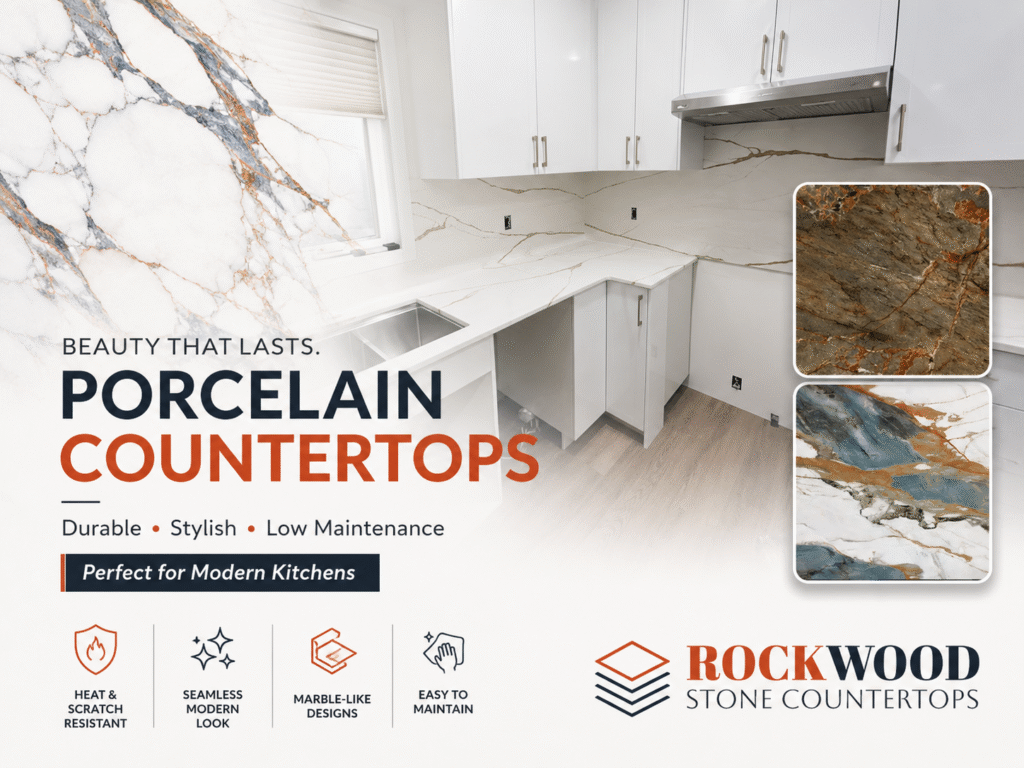
Porcelain slab countertops are made from natural clay, sand, and minerals. These materials are pressed together and heated at very high temperatures to create a hard and dense surface. The result is a strong countertop that works well in bathrooms, kitchens and other indoor spaces.
Porcelain slabs are known for their thin yet durable build. They often have a clean and modern appearance that fits many kitchen styles. Many homeowners choose porcelain slab countertops because they resist heat, scratches and stains in daily use.
These countertops are also available in different colors, textures, and patterns. Some porcelain slabs even copy the look of marble, concrete, or natural stone.
Key Features of Porcelain Slab Countertops
| Feature | Details |
| Strength | Strong and durable surface |
| Heat Resistance | Handles high heat well |
| Scratch Resistance | Resists scratches from daily use |
| Maintenance | Easy to clean and maintain |
| Design Options | Available in many finishes and patterns |
| Best Use | Modern kitchens and busy cooking spaces |
Porcelain slab countertops are a good fit for homeowners who want a sleek look with strong daily performance.
What Are Quartz Countertops?
Made from natural quartz, resin, and pigments, quartz countertops offer a strong and smooth surface. This mix creates a solid and non-porous surface that works well in homes with regular daily use.
Quartz countertops are popular because they offer a smooth appearance and consistent color patterns. These countertops are widely used in both modern as well as traditional spaces due to their balance of durability and style. Many homeowners compare quartz designs with different porcelain slab colors when choosing a surface that matches their overall interior style.
Many homeowners choose quartz countertops because they are easy to maintain and resist stains well. Since the surface is non-porous, it does not absorb liquids easily, which helps keep the countertop clean during daily use. Homeowners also look at porcelain maintenance tips while comparing both materials for long-term care and cleaning needs.
Quartz countertops also come in many colors and patterns. Some designs look similar to marble or granite, while others offer a simple and clean finish.
Key Features of Quartz Countertops
| Feature | Details |
| Strength | Durable for daily kitchen use |
| Heat Resistance | Handles moderate heat |
| Scratch Resistance | Resists scratches well |
| Maintenance | Low-maintenance surface |
| Design Options | A broad selection of colors and patterns |
| Best Use | Family kitchens and everyday use |
Quartz countertops work well for homeowners who want a stylish countertop with simple upkeep and reliable daily performance.
Porcelain Slab vs Quartz Countertops: 5 Key Differences
Both porcelain slab countertops and quartz countertops offer long-term value, but they perform differently in some areas. These differences can affect how the countertop looks, feels and handles everyday kitchen tasks.
Here are the key differences between porcelain slab countertops and quartz countertops.
Strength and Durability
In terms of strength, both porcelain slab countertops and quartz countertops are built to last. Porcelain slab countertops are very hard and dense. They handle daily wear well and maintain their finish over time. Their surface works well in spaces where the countertop is used often throughout the day.
Quartz countertops are also strong as well as reliable. They hold up well under normal daily use and keep their appearance for years. Since quartz contains resin, the surface has a slightly softer feel compared to porcelain slab countertops.
Both options offer durability, but the choice depends on how much daily wear the countertops will face.
Heat Resistance
Porcelain slab countertops and quartz countertops both offer good heat resistance, but they differ in how they handle higher temperatures during daily use. Porcelain slab countertops handle high heat very well, which makes them suitable for spaces where hot items are placed on the surface often.
Quartz countertops can also handle normal heat exposure without problems. However, very high heat over direct contact may affect the resin in the surface over time.
Both materials perform well with heat, but porcelain slab countertops handle higher temperatures more easily.
Scratch Resistance
When it comes to scratch resistance, both porcelain slab countertops and quartz countertops perform well in daily use. Porcelain slab countertops have a very hard surface that resists scratches and marks well.
Quartz countertops also resist scratches during normal use. Their surface stays smooth and clean with proper care.
Overall, both porcelain slab countertops and quartz countertops offer strong scratch resistance, with porcelain slab countertops having a slightly harder surface.
Design and Style Options
Porcelain slab countertops and quartz countertops differ in their design and finish options. Porcelain slab countertops often come in sleek finishes that copy the look of marble, concrete or natural stone. They work well in spaces with a clean and modern style.
Quartz surfaces are available in a wide range of colors, patterns, and textures. Some designs have bold veining, while others offer a softer and more simple appearance.
Even though both materials offer style options, quartz countertops provide more variety, while porcelain slab countertops focus on a sleek and consistent finish.
Weight and Installation
When compared to quartz countertops, porcelain slab countertops are usually thinner and lighter, which can make them easier to handle during installation.
Quartz countertops are heavier due to their dense material mix. Strong support is important during installation to keep the countertop stable over time.
These differences in weight affect the installation process for each material.
Conclusion
Although both porcelain slab countertops and quartz countertops offer durability, style, and easy maintenance, the right choice depends on your daily needs and design preferences.
Porcelain slab countertops work well for homeowners who want high heat resistance and a clean modern finish. Quartz countertops are a strong option for homeowners looking for a smooth surface, reliable durability and a wide range of design choices.
Are you looking for porcelain slabs or quartz countertops for your home? Rockwood Stone offers a wide range of porcelain slabs and quartz countertops designed for different styles and everyday use.
Frequently Asked Questions
Are porcelain slab countertops good for busy kitchens?
Yes, porcelain slab countertops work well in busy kitchens. They resist heat, scratches, and daily wear, which makes them suitable for regular cooking and food preparation.
Do quartz countertops stain easily?
No, quartz countertops resist stains well because they are non-porous. Most spills can be cleaned easily with basic daily care.
Which countertop is easier to clean, porcelain or quartz?
Both porcelain slab countertops and quartz countertops are easy to clean. They only need mild soap, water, and regular wiping to maintain their appearance.
Can porcelain slab countertops and quartz countertops handle heat well?
Yes, both porcelain slab countertops and quartz countertops handle heat well in daily use. Porcelain slab countertops can handle higher temperatures more easily.
Do porcelain slab countertops and quartz countertops last for many years?
Yes, both porcelain slab countertops and quartz countertops are built for long-term use. With proper care, both porcelain as well as quartz countertops can stay in good condition for many years while maintaining their strength and appearance.